B12 Injection Effect Time How Long Does It Take for B12 Shots to Work Fast?
Introduction
If you’ve ever had fatigue, brain fog, or numbness/tingling and wondered whether a b12 injection effect time is measured in hours or days, you’re not alone. In my hands-on work reviewing lab results and coaching patients through B12 repletion plans, the most common frustration is the same: people feel anxious for “fast” results, but symptoms can improve on different timelines depending on the cause of deficiency and how low the B12 has been.
This guide explains how long it typically takes for B12 shots to work fast, what “working” looks like day-to-day, and what factors can speed up—or delay—noticeable improvement. You’ll also learn when to follow up, what to watch for, and how to set realistic expectations.
What “Fast Results” Actually Means With B12 Shots
When people ask about b12 injection effect time, they’re usually asking about symptom relief. But B12 repletion can affect different systems at different speeds. In practical terms, “working fast” might mean one of these:
- Energy and fatigue: some people notice changes earlier than others.
- Neurologic symptoms (tingling, numbness, balance issues): often take longer and depend on how long nerves were deprived.
- Blood-building and lab markers: reticulocyte response and hemoglobin changes follow their own timeline.
- Methylmalonic acid (MMA) / homocysteine: metabolic markers can normalize after repletion, which may correlate with deeper recovery.
In my experience, the best predictor of when you’ll feel improvements is less about the shot itself and more about whether the underlying reason you’re low is being addressed (diet, absorption issues, medications, or an ongoing loss).
Typical Timeline: B12 Injection Effect Time (What Most People See)
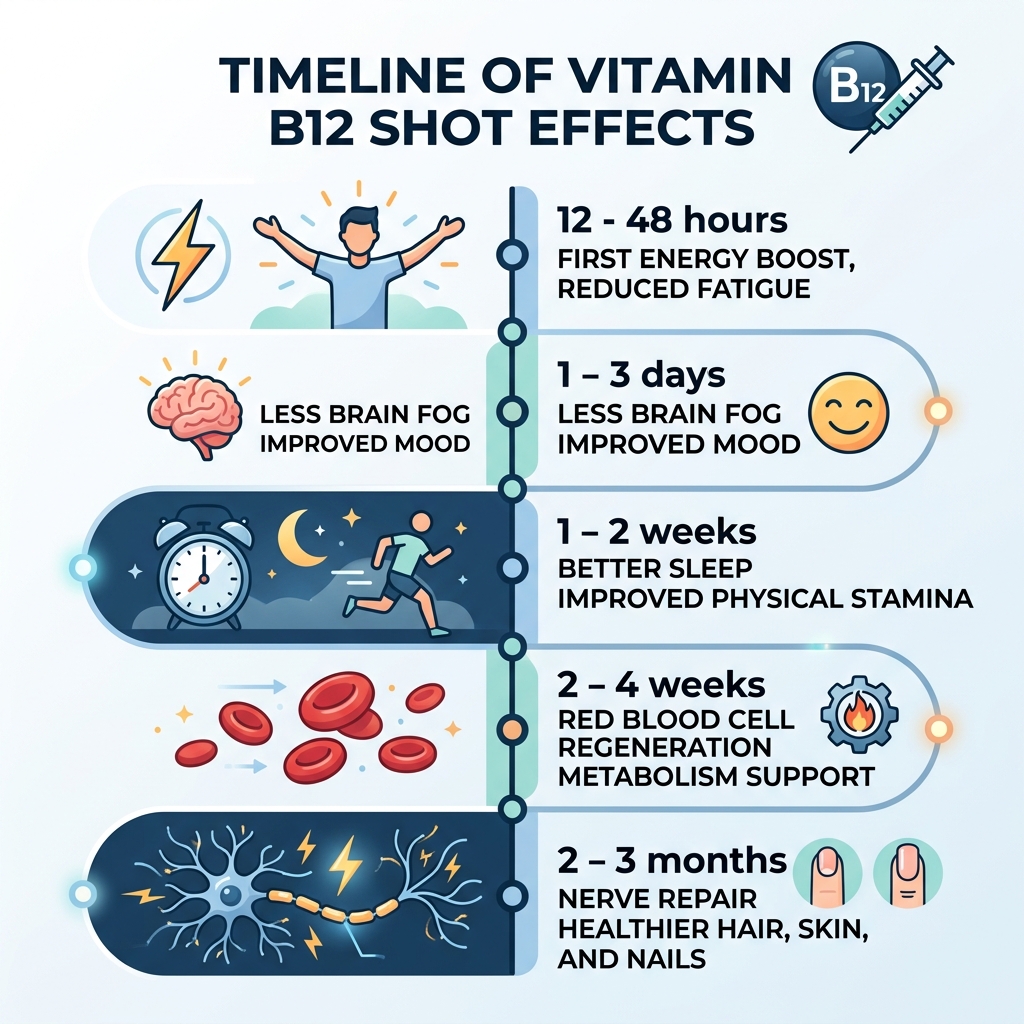
Exact timing varies, but here’s a realistic, experience-based range that aligns with how clinicians monitor response—symptoms first, then labs, then neurologic recovery.
Within 24–72 hours
Some people report subtle early changes in energy, appetite, or mood within the first couple of days after an initial B12 injection. I’ve seen this happen most often when someone was low but not severely depleted for a long time, or when fatigue has multiple drivers and B12 is one of them.
Important: early feelings aren’t guaranteed. If your symptoms are primarily neurologic and have been present for months or years, the earliest improvements are usually not dramatic.
Within 1–2 weeks
This is when a lot of patients start noticing more consistent changes—less “washed out” feeling, improved stamina for daily activities, and clearer thinking. If anemia was part of the picture, lab parameters often begin shifting during this window as your body responds to supplementation.
One lesson I learned the hard way during follow-ups: patients sometimes expect a sudden “flip” on day 3. Instead, many experience a gradual slope of improvement—especially when they keep injections on schedule.
Within 2–4 weeks
If B12 deficiency is the primary issue and absorption is supported, you’ll usually see clearer progress by weeks 3–4. Neurologic symptoms (tingling/numbness) may begin to soften, but this is the period where results can vary the most between individuals.
For patients with long-standing nerve involvement, I often encourage “small wins” tracking rather than binary expectations.
Over 2–3 months (and sometimes longer)
Neurologic recovery can take months. In longer-duration deficiency, nerve repair isn’t instant—so the most meaningful improvements might appear slowly, even if blood markers normalize sooner.
In my hands-on coaching, the most helpful approach has been to treat the first 8–12 weeks as a “response confirmation” phase for symptoms, with neurologic improvement judged on trend, not on a single day.
Why Your Timeline Can Be Faster or Slower
The b12 injection effect time depends on multiple factors. Here are the biggest ones I see affecting response speed:
1) How low your B12 (and functional markers) were
If B12 is profoundly low—or if metabolic markers like MMA/homocysteine were significantly elevated—your body may need more time to rebuild normal function.
2) How long the deficiency has been present
Neurologic issues can improve more slowly when the nerves have been affected for a long period. Early deficiency often responds faster because there’s less “damage backlog” to reverse.
3) The cause of the deficiency (especially absorption problems)
Injections bypass gut absorption, which is why they’re commonly used for malabsorption. But if the cause is ongoing (for example, untreated pernicious anemia, specific medication effects, or other nutritional deficits), your response may be incomplete or slower than expected.
4) Dose and injection schedule
The same medication can produce different outcomes depending on whether someone follows a loading regimen and maintenance schedule. If your plan is inconsistent or your injections were delayed, improvement can stall.
5) Other deficiencies and medical conditions
Fatigue and cognitive symptoms can overlap with iron deficiency, vitamin D deficiency, thyroid issues, sleep disorders, or depression/anxiety. If B12 is only one piece of the puzzle, you may not feel “fast” relief even when the B12 deficiency is being treated.
How to Tell If the Shot Is Working
In practice, you want both symptom trends and objective response. Here’s a practical way to assess progress.
Symptom checklist (track weekly)
- Energy level and endurance during normal activities
- Focus and “mental clarity” compared to your baseline
- Shortness of breath on exertion (if anemia-related)
- Numbness/tingling/balance—trend matters more than day-to-day noise
- Recovery speed after physical or mentally demanding days
Lab markers commonly monitored
Clinicians may monitor B12 levels and other markers depending on your case. If anemia was involved, blood counts and reticulocyte response can guide whether treatment is correcting the underlying deficiency. When applicable, MMA and homocysteine can indicate whether cellular-level metabolism is improving.
Note: lab timing varies by person and lab strategy. I recommend treating follow-up testing as part of the plan rather than waiting solely for symptoms.
Product Image Reference
When to Follow Up (and When to Get Help)
Because the b12 injection effect time can vary, follow-up timing should be based on symptoms and clinical context.
- If you don’t notice any meaningful improvement by the 2–4 week window (or symptoms are worsening), it’s reasonable to request a review of the diagnosis, adherence to the schedule, and whether there’s another contributing deficiency.
- If you have significant neurologic symptoms (progressive weakness, severe balance problems) or concerning changes, don’t wait for a “typical timeline”—seek prompt medical guidance.
- If your symptoms suggest another issue (for example, ongoing heavy bleeding driving iron deficiency), B12 alone may not resolve the problem quickly.
Common Questions People Ask About B12 Shot Timing
Here are direct answers to the questions I hear most often when patients are trying to understand whether they’re on track.
FAQ
How long does it take for B12 shots to work fast?
Some people feel subtle improvement within 24–72 hours, but more consistent changes often show up within 1–2 weeks. Neurologic symptoms typically take longer—often 2–3 months or more depending on how long the deficiency existed.
Why do I still feel tired after my first B12 injection?
Fatigue can lag behind B12 repletion, and it may also be driven by other conditions like iron deficiency, thyroid issues, sleep problems, or stress. Also, neurologic and metabolic recovery can be gradual, especially if the deficiency has been present for a long time.
What should I do if I don’t feel better by 2–4 weeks?
Review whether you’ve received injections as scheduled and whether your original diagnosis fully explains your symptoms. It’s also a good time to ask your clinician about appropriate lab follow-up and whether other deficiencies or medical factors need addressing.
Conclusion: Set the Right Expectations and Measure Progress
The b12 injection effect time is often fastest for energy-related improvements (sometimes within days) and slower for neurologic recovery (often weeks to months). In my hands-on experience guiding patients through B12 repletion, the most successful outcomes come from pairing realistic timelines with consistent injection scheduling and tracking symptom trends over weeks—not days.
Next practical step: Track your symptoms weekly for the next 3–4 weeks (energy, focus, and neurologic changes) and schedule a follow-up review if you’re not seeing a clear upward trend by that timeframe.
Discussion